(We travelled in June 2019)
(for our journey to Rome, see here)
At Benevento, half way through our journey from Rome to Lecce, the men sitting across the aisle almost got left behind when the train pulled away. They’d got on separately, but had bonded over their need for nicotine, jumping out onto the platform for a quick smoke at every station. At Benevento, it nearly all went horribly wrong, and they had to jump back on as the doors were closing, although this didn’t stop them doing the same again at the next station (smoking on at least some parts of station platforms is allowed in Italy, in case you are concerned about illegality, rather than just getting left behind).
We were heading to Lecce, in the heel of Italy’s boot, after three days of being very touristy in Rome. I’m not going to say too much about the Eternal City, as most of it’s been said before (There are a few recommendations in the details section at the bottom of this blog). We managed to cover a lot of the main tourist sites, without it feeling too rushed, but after the crowds that modern mass-tourism produces in Rome, we were looking forward to something a little less frantic.
The journey from Rome to Lecce takes around five and half hours by Frecciargento train (slightly less fast than a Frecciarossa, but still pretty quick), and runs across Italy, through mountains and vineyards, before shadowing the Adriatic coastline from Bari, through miles upon miles of Puglian olive groves. We ate toasted piadine (flatbreads) from the buffet car, washed down with bottles of pre-mixed Aperol Spritz (the Italian answer to gin in a tin).
We stepped off the train in Lecce at sunset (and on time), to be greeted by the sound of hundreds of swallows flying through the darkening sky. It didn’t feel like that long a journey, but Lecce feels a long way from Rome. It’s in the Salento Peninsula, about as far south as you can go in Italy, and has a self-sufficient air that makes it feel more remote than it really is.
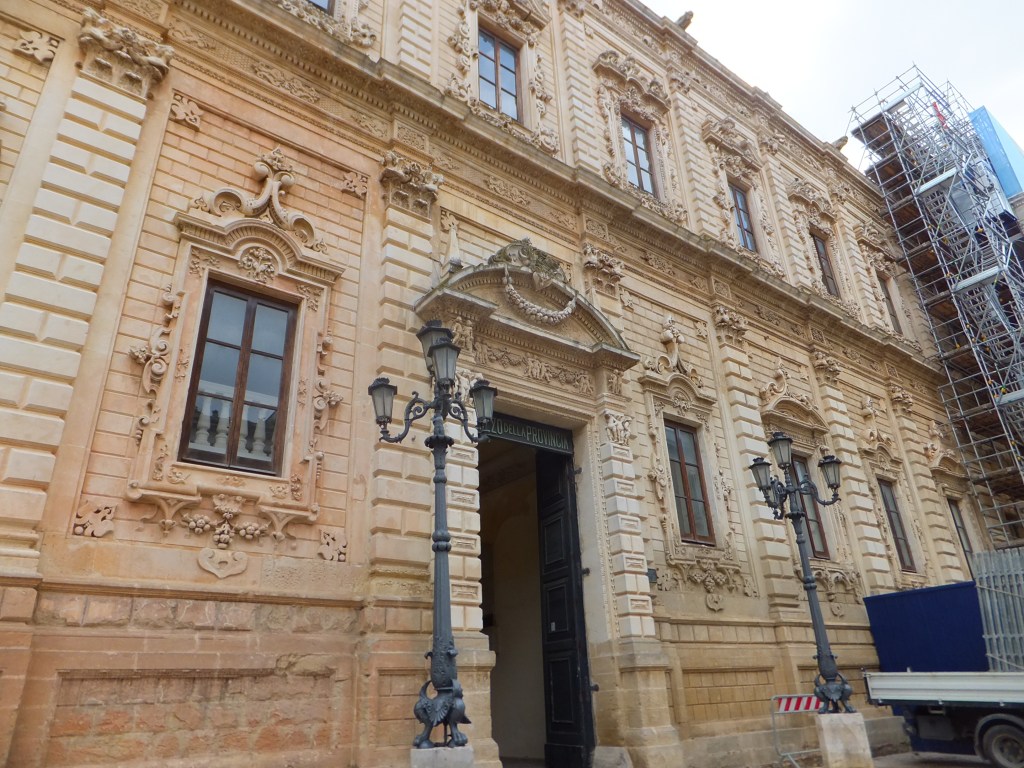
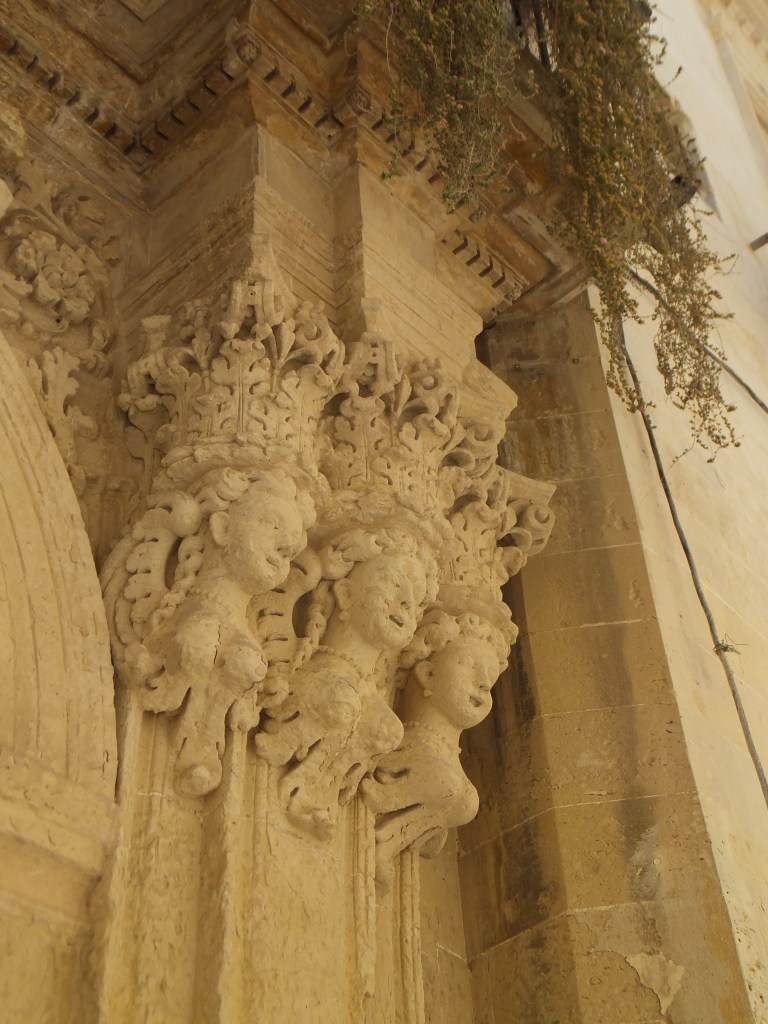
It’s sometimes referred to as the ‘Florence of the South’, but I don’t see that much resemblance, and Lecce is too wonderful not to be appreciated in its own right. It’s a moderate-sized city, large enough to be lively, small enough to feel friendly. It has a unique style of architecture, known as ‘Leccese Baroque’: the pale gold local stone is easy to carve, and architects responded with glee, covering surfaces in intricate designs.
Lecce is a good place to relax. It comes alive at night, when you can grab a glass of the local rosé (which is worth trying even if you think you don’t like rosé), and indulge in some people watching. In Italy, this is not the slightly illicit sport it is in the UK, but an honourable local tradition, so you can gaze without guilt.
You could easily do very little more in Lecce than this, and not waste your time, but if you want to do more, there are plenty of options. We visited the seaside town of Gallipoli (nothing to do with the First World War battle) by local train (which appeared to date from the early 70s) and our hotel (details below) organised a tour of a vineyard and wine tasting (yes, we like wine…). If we’d stayed longer, we’d probably have taken some more trips out of town, or taken a Puglian cookery lesson.
The time we spent in Lecce was one of the most relaxing of my entire life, and I didn’t want to leave, but trains were booked, so after a week we turned our faces to the north again, to head home – which is a story for another blog.
The details:
Rome
Eating and drinking: We discovered Civico 24 on Via della Scrofa (where Caravaggio used to get into fights, Renaissance art fact fans!) looking for lunch a few hours after we arrived. It is the perfect neighbourhood wine bar/deli. If I lived in Rome, I’d probably live there.
We ate at Grano (Piazza Rondanini, near the Pantheon) on our first night, and liked it so much we went back for our last night. They do a mixture of Roman and southern Italian food, all cooked to perfection, and have a good wine list too.
Sleeping: We stayed at Palazzo Dama, on the Tiber embankment, about 20 minutes walk north of the Pantheon, and around the corner from Piazza del Popolo. It’s an elegant and welcoming hotel with a good location (we were able to stroll around the corner to Santa Maria del Popolo and look at their two Caravaggios before breakfast, which you can’t do everywhere), but its USP is the fact that it’s one of the few hotels in Rome with a swimming pool, located in a pretty courtyard to the back of the hotel. Perfect after a hot and dusty day’s sight-seeing. My only criticism of the hotel is that they charge €3 each for the capsules for the in-room Nespresso machine – in a hotel of this standard (and price) I’d expect them to be included.
Lecce
Eating and drinking: The food in Puglia is fabulous. Alle Due Cortile does very good traditional food, from a menu written in English and Pugliese dialect (which other Italians find incomprehensible). Try the Ceceri e tria (pasta and chickpeas – sounds dull, tastes amazing.) You can also find possibly the world’s best pizza at Pizza & Co on via Giuseppe Libertini. There’s one bench and two outside tables, so if you see a space, grab it, then order some beer and a slice (or ten, I won’t judge) of pizza.
All of the bars along Via Umberto are pretty good, but we adopted Mamma Elvira’s as our local. They have a great selection of local wines, and good tapas-style food.
The local speciality coffee is (deep breath) Caffe in ghaccio con latte di mandorla (iced coffee with almond milk) and is a perfect mid-morning pick-me-up on a hot day. Most bars and cafes will serve it, but we liked Café Trinchese (on via Trinchese, funnily enough).
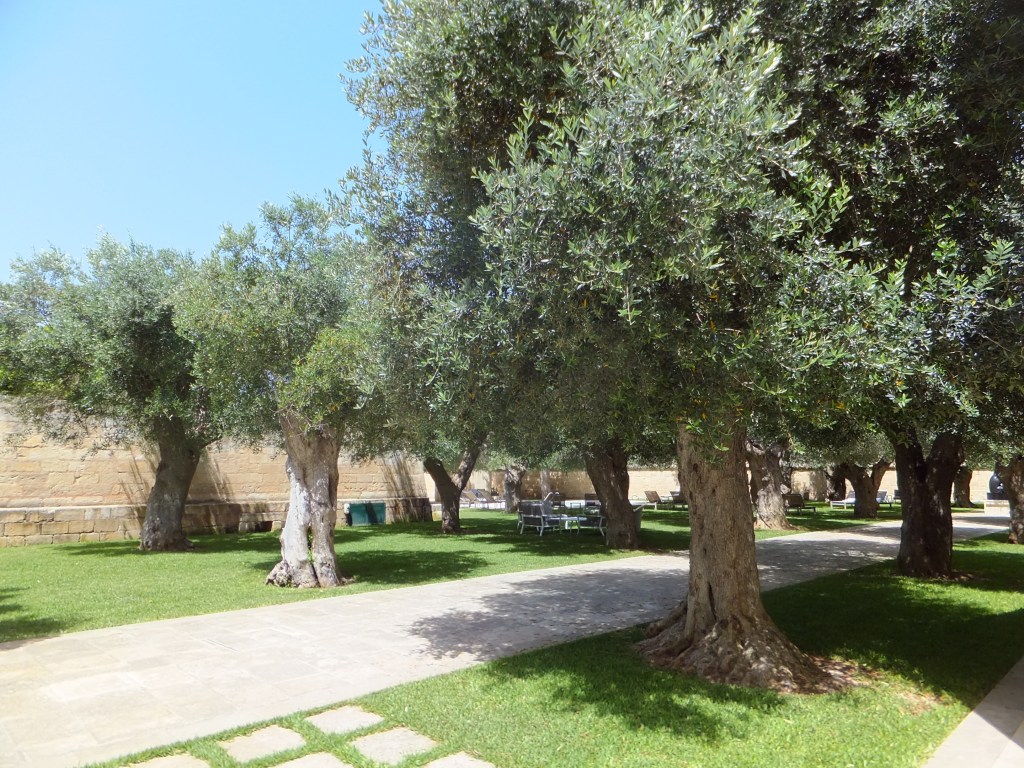
Sleeping: We stayed at La Fiermontina Urban Resort – which turned out to be a definite contender for my favourite hotel ever. It’s constructed out of and around an old palace tucked in beside the city walls, with a garden filled with olive and citrus trees and sculptures (and a swimming pool), everything about it has obviously been very carefully thought out, but it stills feels effortless. We were welcomed with water, coffee and tarallini – little baked dough rings which are Puglia’s traditional snack (you can eat a lot of tarallini in Puglia – fortunately I love them). The room we had was spacious, cool and comfortable, with original art on the walls. And the capsules for the Lavazza coffee machine were included.
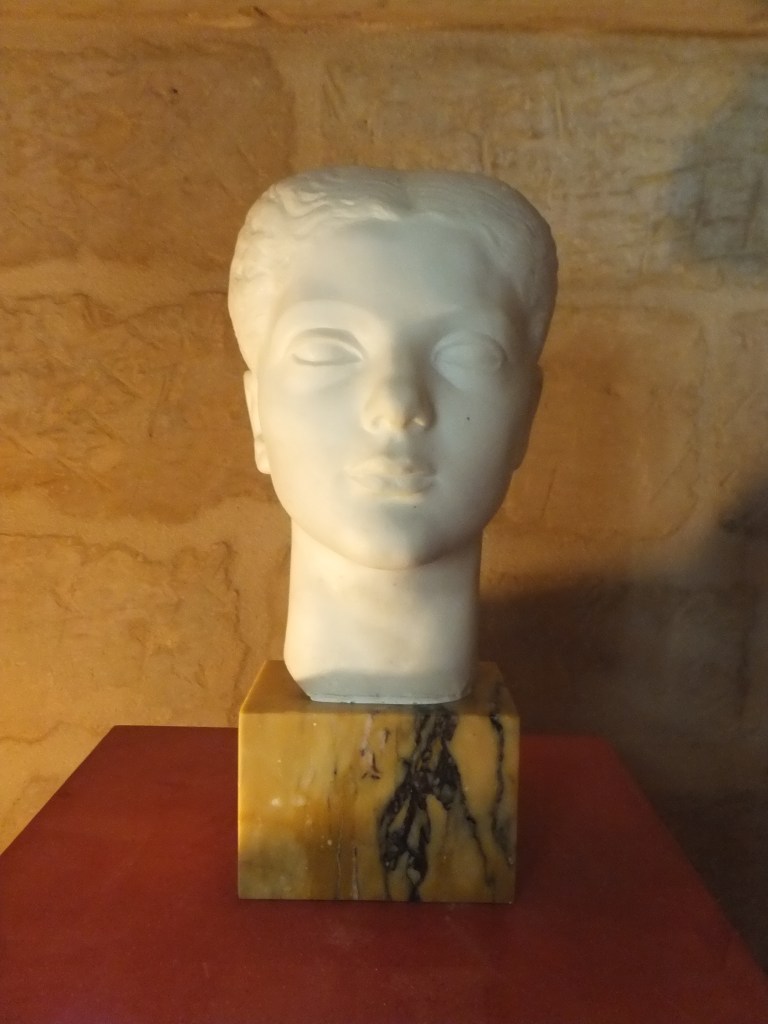
The hotel’s collection of art is the result of the woman it’s named after: Antonia Fiermonte was wife and muse to two important 20th century sculptors, René Letourneur and Jacques Zwobada. The hotel was developed by the grand-children of Antonia and René, as a tribute to the grandmother they never met. As well as the hotel, they have a small private museum of art, just around the corner from the hotel, which we were shown around by one of the owners – another Antonia. One of the pieces in the museum is a beautiful head of her in marble, carved by her grandfather when she was a girl – it’s an unusual experience to see a piece of art whilst standing next to the person it’s based on. The Museum is open by appointment, and is definitely worth a visit if you’re interested in modern art.
Practical tips for this journey:
*The English-language Trenitalia app is worth downloading. It will tell you if your train is late (or early – it does happen, despite Italy’s reputation), and will often show a platform before station departure boards.
*You’ll need a €1 coin for most station toilets in Italy.
*Platforms are low in Italy, so you’ll need to navigate three steps to get on and off trains.
*You need a pre-booked ticket and have a reservation for all long distance journeys.
*Platforms are mainly open access, only the largest stations (Milano Centrale and Roma Termini among them) have gates, although not barriers that actually read your ticket, rendering them a bit pointless. They do have staff but they don’t seem to be interested in looking at tickets.
*We travelled from Rome to Lecce on a Frecciargento train. In first class you get water, coffee and snacks.

 Let The Train Take The Strain